
At first glance, the Book of Ezekiel can seem a baffling piece of literature. Ezekiel is a young priest caught up in the historic exile of around 10,000 people of Judah after a failed rebellion against the Babylonian superpower of the day in about 597 BCE.
Four years later, in 593, God calls Ezekiel to the vocation of prophet (Ezk 1:2). Ezekiel’s primary audience is the Hebrew exiles in Babylon who struggle to make sense of their exile and the world events that have shattered their livelihoods and their faith.
But worse was to come: in 587/586 BCE, the Babylonians intensified their war against Judah, leading to the terrible destruction of Jerusalem that obliterated Solomon’s temple and much of the city. Ezekiel and his fellow exiles hear about these horrific events from Babylon. It falls to Ezekiel to care for his people, offer leadership, and inspire hope in a very dark period of Jewish history.
Our text today comes from near the end of Ezekiel’s long prophecy (along with Isaiah, Jeremial, and Daniel, he is one of the four “major prophets”). In chapters 34-37, Ezekiel seeks to show that God’s purposes are flowing in two directions: there is a specific purpose for God’s people, and a parallel but much wider purpose for God’s world.
The final, climactic section of the Book of Ezekiel (chapters 38-48) discuss these two purposes of God in reverse order. In chapters 38-39, Ezekiel describes how God deals with those who resolutely oppose his will (such as the political and military leaders of Babylon, or the mysterious Gog and Magog); and in chapters 40-48, “Ezekiel portrays the future of God’s people with all the rhetorical power of his priestly worldview, sketching the contours of a restored temple, land and people.”[1]
A river from the temple
As Ezekiel speaks, he knows the glorious temple of his childhood has been destroyed, along with most of Judah’s hopes and dreams. But there is hope. A new temple will rise, both land and people will be restored, and the presence of God will return.
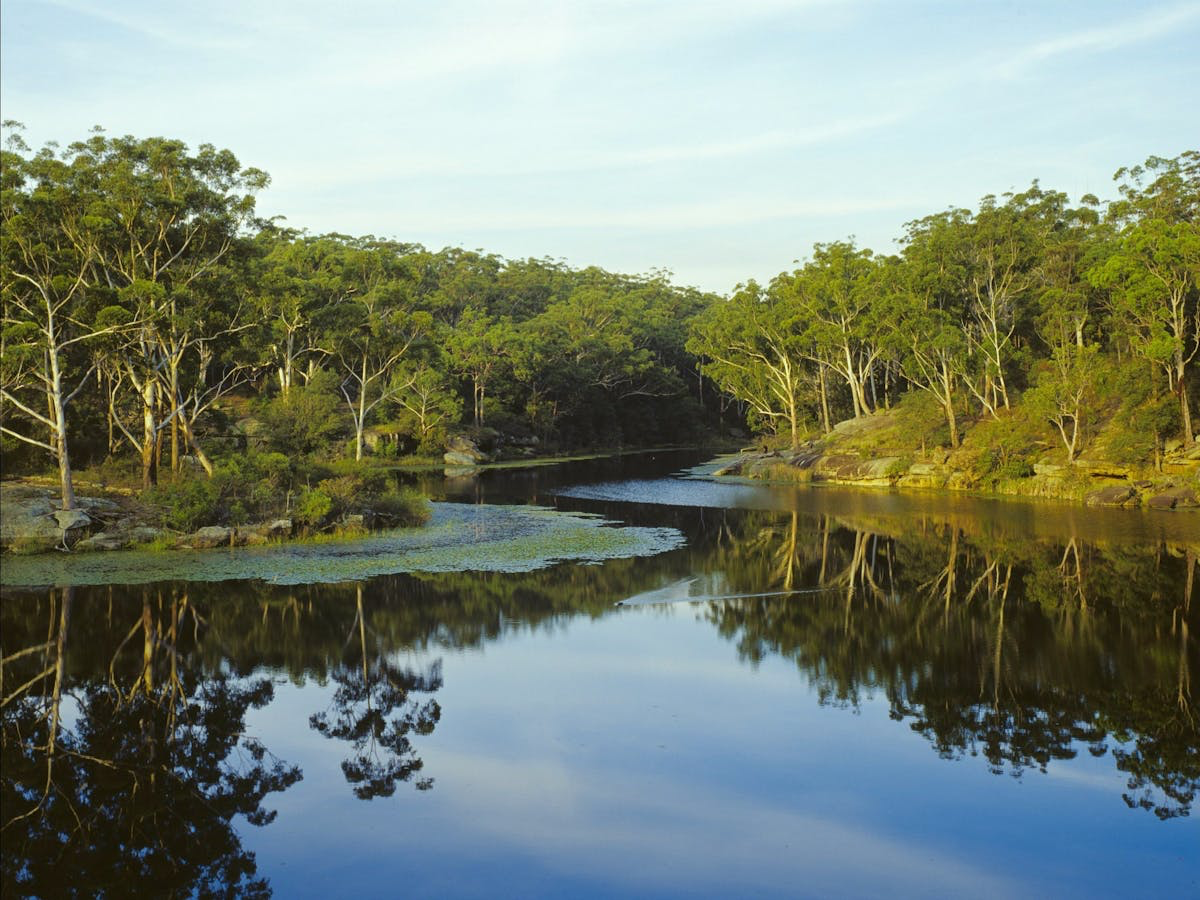
In a vision, Ezekiel stands before this futuristic temple and observes a stream of water flowing out beneath the threshold of the temple doors. It appears insignificant, but as he follows its course it becomes progressively deeper until it forms a river too great to cross on foot. Wherever the river flows, new life appears. Trees flourish, fish become abundant, and waters that were previously unable to sustain such abundance are transformed by the power of God.
The river becomes the central image through which Ezekiel imagines personal, social and cosmic renewal. His people are experiencing displacement, destruction and loss. The vision of living water does not arise from prosperity or confidence. It is given to people who know devastation, and Ezekiel declares that devastation does not have the final word.
That is an important starting point for our consideration of the liturgical Season of Creation. We need not pretend that the ecological condition of the world is uncomplicated. We know the climate is changing; we know about polluted waterways, habitat loss, degraded land, declining species, dangerous sea level rise in the Pacific and Indian Oceans.
Yet Ezekiel does not begin with a program of political action. He begins with a vision of a beautiful river. He begins with an image of divine generosity. And the river has its origin in God.
Creation before crisis
Before creation is a problem requiring human intervention, we need to receive it as a gift from God. Air, water, soil, plants, animals, seasons and ecosystems precede us. We receive life before we manage it. Environmental concern can easily be dominated by the language of pollution, extinction, warming, degradation and collapse. These are serious realities and should not be minimised, but they are not the first thing Christians need to say about creation. The first word is gratitude.
Rain, soil, rocks, trees, grasses, rivers, oceans, birds, fish, animals, humans—all have worth because they belong to God and are deeply interconnected. Creation is not valuable simply because human beings need it or can find ways to monetise its resources. Creation is of value because it belongs to God.
Psalm 104 understands this well. The psalmist delights in springs, mountains, trees, wild animals and creatures of the sea. Much of what is celebrated has no obvious usefulness to humanity. The world is praised because God delights in it.
Ezekiel’s vision has the same quality. Fish flourish because life is returning, trees grow because water is flowing, and fruit and leaves appear in abundance. The image is physical, material and ecological. We should not reduce it to mere scenery and then draw from it an exclusively spiritual message.
Physical life and spiritual life
At the same time, ecological flourishing does not exhaust the biblical meaning of life. Ezekiel’s vision concerns real water, land, trees, fish and human communities. A restored river is good because its living systems flourish. A healthy forest does not need to symbolise spirituality before it matters to God.Yet the river flows from the divine sanctuary. The source of life is the presence of God.
Scripture does move beyond the physical to speak of life as reconciliation with God, heart-renewal, forgiveness, holiness, and communion with the Creator. Physical and ecological life should not be confused with spiritual life, but neither should they be separate from it. Both belong within the generous purposes of God for creation.
The New Testament deepens this vision. The Letter to the Colossians describes Jesus Christ as the one through whom and for whom all things were created, and in whom all things hold together. Christian faith cannot therefore divide the world into things that matter spiritually and things that do not. The whole created order exists in relation to Christ. Yet the same Christ also reconciles sinful human beings to God. Creation and salvation belong together without becoming identical.
Learning to notice
Life in the Australian continent is shaped by recurring experiences of drought and rain, fire and flood, scarcity and abundance. Elements of this ecological diversity and the cycles of the natural world are visible to us locally as well as continentally.
Lake Parramatta, just a few hundred metres from where we meet today, lies within the Hunts Creek catchment, whose boundaries include ridgelines along North Rocks Road, and the wider area forms part of the Parramatta River catchment. Suburban infrastructure, housing, and the impact of late-industrial capitalism may obscure these relationships with the natural world, but they cannot abolish them. We live within watersheds whether we notice them or not, and those water features shape us in ways that often remain invisible.
In her poem, “The Summer Day,” Mary Oliver captures something of the struggle to embrace attentive wonder at the ordinary world, and how such attention has the power to awaken us to the preciousness and responsibility of being alive in the world:
I don’t know exactly what a prayer is.
I do know how to pay attention, how to fall down
into the grass, how to kneel down in the grass,
how to be idle and blessed, how to stroll through the fields,
which is what I have been doing all day.
Tell me, what else should I have done?
Doesn’t everything die at last, and too soon?
Tell me, what is it you plan to do
with your one wild and precious life?[2]
Similarly, Ezekiel’s river invites us to observe creation as gift before rushing to manage or repair it, or conscript it into spiritual metaphor.
One simple form of ecological discipleship is to pay attention. We can learn the creek closest to our home, smell the scent of the eucalypts around us, notice where the rainwater flows, discover the name of a local bird or tree, and discover something of the Aboriginal history of the land on which we live.
We might also create small spaces where creatures can flourish through native planting, protection of mature trees and habitat for birds and insects. These actions will not solve the ecological crisis, but they train us to see the world differently. And that is the seed of healing change.
On the other hand, it is possible to become increasingly attentive to rivers, trees, habitats and species while remaining inattentive to the state of our own souls. We may care deeply for ecological life and still neglect the life God offers in Jesus. The restoration of a creek cannot reconcile us to God, and the recovery of a species cannot heal the estrangement of the human heart.
Ezekiel begins beside the river, but he does not remain there. His guide leads him into the water. He first notices the river; next week we will explore what happens when he steps into it. Creation is loved before it is useful. But as we attend to the ecology around us, let us not neglect the ecology of the spirit. The God who gives life to rivers and forests also calls us into the deeper life of grace, reconciliation and salvation that are found and experienced only in Jesus Christ.
Sermon 870 copyright © 2026 Rod Benson. Preached at North Rocks Community Church, Sydney, Australia, on Sunday 6 September 2026. Unless otherwise noted, Scripture quotations are from The Christian Standard Bible (Nashville: Holman Bible Publishers, 2020).
Rev Dr Rod Benson is General Secretary of the NSW Ecumenical Council and a minister of the Uniting Church in Australia serving at North Rocks Community Church in Sydney.
References
[1] Christopher J. H. Wright, The Message of Ezekiel (Leicester: IVP, 2001), 315.
[2] Mary Oliver, “The Summer Day,” in Devotions: The Selected Poems of Mary Oliver (New York: Penguin Press, 2017, 316.
Image source: Sydney.com
Taking it further…
Reflection questions
- What does the sermon mean by saying that “the river begins with God”, and how does this influence a Christian understanding of ecological concern?
- How does the sermon distinguish between physical and ecological life and spiritual life, while insisting that they should not be separated?
- What is the significance of “learning to notice” in the sermon, and how do Ezekiel’s vision, the local environment and Mary Oliver’s poem reinforce this theme?
Application questions
- What natural features—creeks, waterways, trees, birds, soils or habitats—are present where you live, and how well do you actually know them?
- What practical habit could you adopt this week to become more attentive to creation: walking slowly, observing a local waterway, identifying native species, gardening, journalling or spending time outdoors in prayer?
- What is one small action you could take to help another creature flourish—for example, planting native vegetation, protecting habitat, reducing pollution or conserving water?

