
Papal citizenship, Catholic social teaching, and the politics of conscience
By Rod Benson
The confirmation that Pope Leo XIV voted in the November 2026 United States midterm elections raises a question that is at once historical, canonical, theological and diplomatic. The Holy See Press Office stated that the pope believes participation in democratic processes to be both a “right and the duty of citizens.” The Holy Father’s decision to participate in this election illuminates the distinction between his private civic agency and the public responsibilities of universal pastoral office; the difference between moral norms and prudential electoral choices; and the evolving Catholic assessment of democratic authority.
In this article, I situate the historic event in the context of nineteenth-century papal electoral abstention policies, twentieth-century developments in Catholic social teaching, the law of clerical political participation, the evolving diplomacy of the Holy See, and the principles of religious liberty and contemporary Catholic synodality.
A papal ballot and its interpretive limits
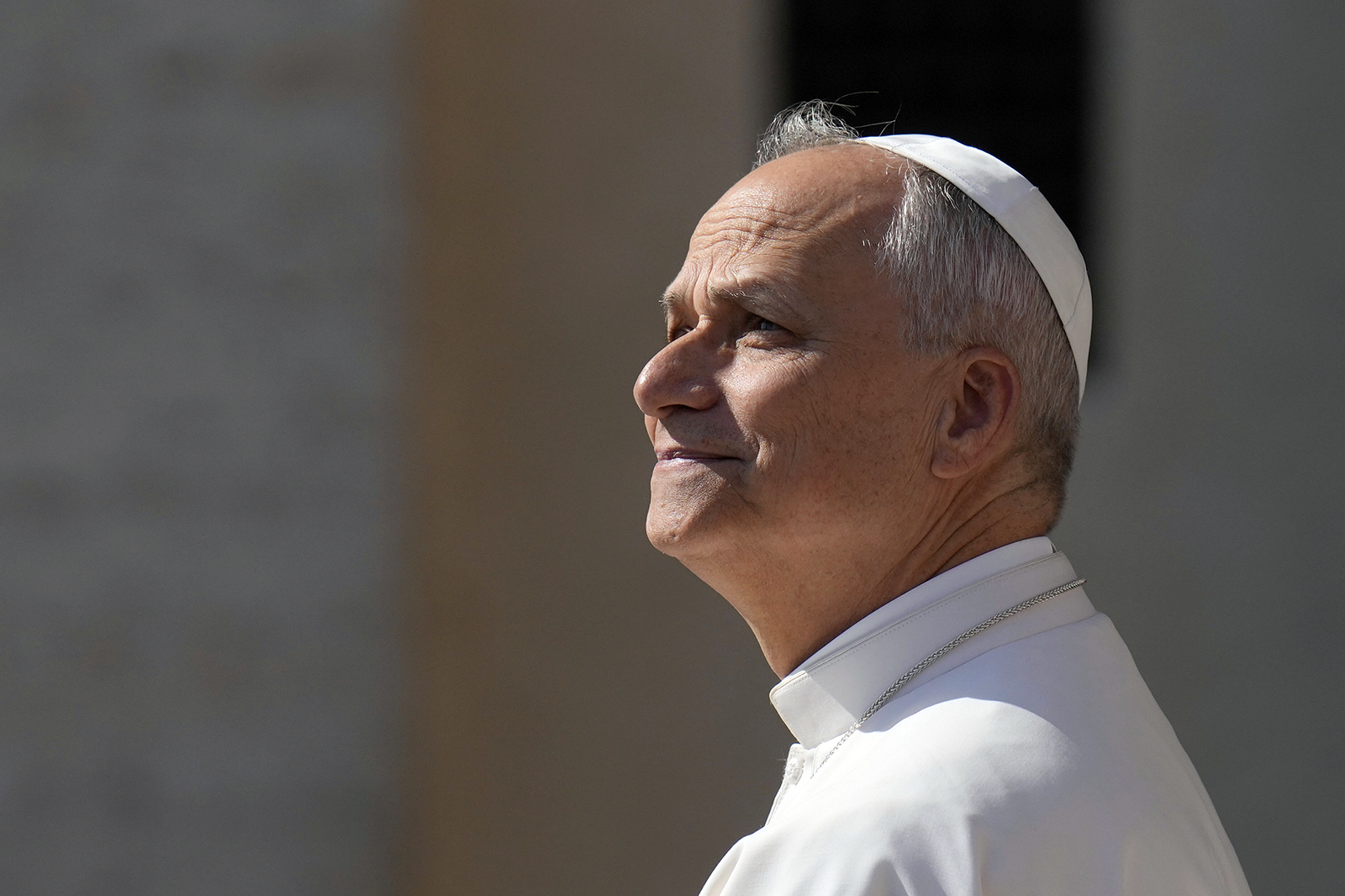
On 30 October 2026 the Holy See Press Office confirmed that Pope Leo XIV, born Robert Francis Prevost in Chicago, had returned a mail-in ballot to Chicago for the United States midterm elections of 3 November. It explained that he had exercised the franchise whenever eligible as a United States citizen and had also voted during his years of residence in Peru. The statement concluded: “The Holy Father expresses his belief in the right and the duty of citizens to participate in democratic processes.”[1] The announcement establishes that Leo voted but does not disclose his selections, nor any private reasoning that may have informed the ballot. It is the first publicly documented instance of a reigning pope voting in a United States election, and possibly the first known political vote by a reigning pontiff, but it is not proof that no previous reigning pope has ever cast a ballot in a democratic election.[2]
The central question is how a pope may participate in a national electorate without speaking electorally for the Catholic Church. Voting is legally a civic act, morally an exercise of conscience and symbolically a public act when undertaken by someone whose office attracts international scrutiny. These dimensions do not necessarily coincide. By announcing participation without identifying a candidate or party, the Holy See affirmed citizenship while avoiding a formal endorsement. Yet secrecy does not eradicate symbolism: in a polarised setting even voting by mail, or choosing to vote at all, may be interpreted politically. The proper starting point is a distinction between what the Vatican confirmed and the wider meanings assigned to it by commentators.
The rocky road from abstention to participation
It is historically inaccurate to present the papacy as an uninterrupted champion of democratic voting. In the nineteenth century the political circumstances of Italian unification, anticlerical legislation and the loss of papal temporal territory profoundly conditioned its approach to elections. The policy commonly described as Non Expedit (“it is not expedient”) instructed Italian Catholics not to take part in elections to the parliament of the new Italian kingdom. Associated with a ruling of the Sacred Penitentiary in 1868 and subsequently reinforced, it was directed to a particular national and constitutional conflict, not a general theological assertion that voting was sinful. Leo XIII’s 1895 letter Quale debba explicitly maintained the restriction for Italian political elections while distinguishing the desirability of participation in municipal administration. [3] Pius X allowed exceptions in 1905, and the prohibition was effectively superseded in 1919 under Benedict XV.
This history corrects two oversimplifications. First, the doctrine that Christians have social obligations does not dictate a single political strategy across all historical situations; a papacy defending its sovereignty could judge electoral abstention prudent, or impose it, even as later Catholic teaching praised participation. Second, the abstention of Italian Catholic voters under Non Expedit must not be conflated with a personal rule requiring the pope himself to abstain. The former was a documented restriction on a defined electorate; the latter is an apparent modern papal practice for which neither an exhaustive historical inventory nor a universal prohibition has been established. A convincing account of Leo’s action must therefore distinguish the history of Catholic lay suffrage from the narrower history of whether reigning pontiffs personally voted.
The development of Catholic teaching in this field was gradual. Leo XIII’s Rerum Novarum (1891) addressed labour, property, association and obligations to the poor, but his concern for social justice did not entail an exclusive preference for parliamentary democracy. Pius XII’s wartime reflections gave greater attention to accountable forms of government. John XXIII’s Pacem in Terris (1963) located legitimate authority within an increasingly explicit language of human rights, duties and political participation. The Second Vatican Council then provided a decisive synthesis: Gaudium et Spes §75 commended political institutions that enable citizens to participate freely and called attention to “the right and also the duty to use their free vote to further the common good”. Its language is strikingly close to the Holy See’s explanation of Leo’s ballot. John Paul II’s Centesimus Annus §46 subsequently valued democracy for facilitating participation, accountability and peaceful changes of government while making its legitimacy conditional on law and human dignity.[4]
A right and a duty
The formulation “right and duty” has genuine moral content. Catholic social teaching does not regard the vote merely as a consumer preference or a device for protecting sectional interests. The Catechism §2240 places voting beside taxation and other civic responsibilities, because political membership entails co-responsibility for the common good.[5] At the same time, the expression ought not to be absolutised into the proposition that every Catholic must vote in every election, whatever the legal regime or available options. Whether a citizen is eligible, whether an election is free, whether participation can be meaningful, whether abstention may itself be a conscientious protest, and what constraints attend the choice all affect the application of a general duty. Compulsory-voting systems illustrate the distinction between legal requirements and the wider moral assessment of civic responsibility; neither universal electoral compulsion nor a fixed approach to a defective ballot follows automatically from the Vatican statement.
Nor does responsible citizenship begin and end at the polling place. The Compendium of the Social Doctrine of the Church treats participation as a principle governing social institutions and ordinary civic activity, including local associations, deliberation and the scrutiny of authority. The scriptural imagination supporting this view includes the dignity of persons created in God’s image (Gen 1:26–27), the prophets’ insistence upon justice (Amos 5:24), the command to seek the welfare of the place of one’s residence (Jer 29:7) and Jesus’ refusal to collapse what is owed to Caesar into what is owed to God (Mk 12:17). These texts cannot yield a Christian party platform, but they do establish the moral significance of political relations while leaving much of institutional design and policy assessment open to reasoned judgment.
Papal office and the difference between voting and partisanship
The Code of Canon Law distinguishes the ministry of clergy from the exercise of state power. Canon 285 §3 prohibits clerics from assuming public offices entailing civil governmental authority, while canon 287 §2 ordinarily restricts their active participation in political parties and the leadership of trade unions. Neither canon expressly prohibits casting a secret ballot.[6] They should not be applied simplistically to the Roman pontiff, whose canonical position is exceptional. However, they do indicate that the institutional dangers associated with partisan management or governmental office are not identical with the act of voting. Catholic norms discourage the identification of ordained ministry with party competition, not the exercise of all civic judgment.
Papal infallibility supplies no reason for treating a pontiff’s ballot as an authoritative moral verdict. As defined in Catholic doctrine, infallibility concerns specified definitive teaching on faith and morals under stringent conditions, not ordinary assessments of candidates, electoral tactics or predicted policy effects. A pope’s personal vote belongs to the field of contingent prudence, even when inspired by stable moral convictions. Neither his spiritual authority nor the fact of his electoral participation confers additional votes upon him or transforms a particular candidate into the Church’s nominee. This is especially important in reading claims about Leo’s previous participation in elections or primary ballots: registration and ballot histories do not reveal which candidates he supported, and any attempt to reconstruct his present preferences from those records would outrun the evidence.
Diplomatic independence, multiple citizenship and a universal Church
There remain reasons why previous pontiffs may have considered abstention preferable. The pope serves a worldwide communion whose members belong to different nations and parties. He also presides over the Holy See, which conducts diplomatic relations in its own right, while holding sovereign authority in Vatican City State. The Holy See and Vatican City are legally distinct, and neither is identical with the personal citizenship of the man elected pope. Leo’s American and Peruvian citizenship make these distinctions conspicuous. A vote cast under American electoral law is not a diplomatic act of the Holy See and does not purport to represent Catholics in other countries. At the same time, the papal office inevitably gives even a personal choice public resonance.
The argument for papal abstention is therefore best framed as a prudential judgment about independence. Abstention may protect the appearance of impartiality, especially where an election bears upon the Holy See’s relations with a government; participation may demonstrate respect for ordinary democratic responsibilities and the political equality of citizens. Neither option is guaranteed to be free of interpretive costs. Political neutrality itself requires definition: the Holy See can decline to endorse parties while criticising war, injustice, repression or abuses of human rights. It is not “neutral” between human dignity and its violation. As Leo notably observed in an April 2026 address to the Pontifical Ecclesiastical Academy, papal diplomacy is properly oriented towards peace, justice, dialogue and reconciliation.[7] This vocation may justify discretion about ballots without demanding silence on public morality.
Conscience, moral absolutes and political plurality
How may the pope form a personal political judgment? Catholic tradition answers by invoking Scripture, natural moral reasoning, magisterial teaching, attention to evidence, experience, conscience and the virtue of prudence. The Catechism §§1783–1785 treats conscience as requiring formation rather than equating it with unexamined preference. Catholic social teaching gives this formation substantive content through human dignity, solidarity, subsidiarity, the common good, the preferential option for the poor, the protection of life, religious freedom and the responsibilities of political authority. None of these principles, considered in isolation, identifies a particular ballot choice. Evaluating candidates also requires judgments about institutional competence, intentions, likely consequences, feasibility, competing harms and the imperfect alternatives that elections often present.
The Congregation for the Doctrine of the Faith’s Doctrinal Note on Some Questions Regarding the Participation of Catholics in Political Life (2002) is relevant here. It explicitly accepts a plurality of morally legitimate political solutions because social circumstances and practical means differ, while denying that such pluralism implies that fundamental ethical claims are arbitrary. It also warns that some positions cannot be reconciled with core moral requirements and cautions against isolating one topic from Catholic teaching as a whole. The document thus challenges two opposite distortions: a relativism in which every policy becomes morally interchangeable and a confessional partisanship in which every complex policy question has one uniquely Catholic electoral answer. The scope for honest disagreement is real, but it is bounded by moral commitments that require continuing scrutiny.[8]
Precisely because empirical judgments are fallible and political outcomes uncertain, the pope’s own ballot cannot terminate Catholic deliberation on relevant issues. Moral reasoning may yield firm opposition to a particular injustice without yielding a single definitive ranking of all candidates. Nor should political independence become indifference. The task of ecclesiastical teaching is to illuminate obligations and criticise abuses without pretending that prudential judgments possess the status of revealed doctrine. This distinction preserves space for the formation of conscience and for conscientious disagreement among Catholics.
Democracy, liberty and the limits of religious power
For Catholic social teaching, democracy is more than the arithmetical victory of a majority. Centesimus Annus §46 values the possibility of electing, holding accountable and peacefully replacing rulers, but insists on the rule of law, participatory structures and an adequate conception of the human person.[9] In his 9 April 2026 message to the Pontifical Academy of Social Sciences, Leo described authentic democracy as recognising every person’s dignity and calling citizens to responsible participation; without moral foundations, he warned, the system could become majoritarian domination or the instrument of concentrated economic and technological interests.[10] His subsequent vote may be understood as an enactment of that publicly stated account, though the act of voting alone cannot validate any particular electoral system or its results.
This interpretation requires an equally strong affirmation of religious freedom. Dignitatis Humanae, promulgated at Vatican II, grounds the right to immunity from coercion in religious matters in human dignity and specifies that religious adherence cannot properly be produced by governmental force.[11] The declaration does not imply that Catholics must set aside their convictions in public discussion. It means that religious authority and civil coercion cannot simply be fused, and that citizens of diverse beliefs must possess equal civic rights. The 2002 Doctrinal Note affirms the legitimate autonomy of political society while preserving the Church’s capacity to make moral judgments upon public action. Catholic claims about truth and conscience consequently coexist with a principled rejection of using ecclesiastical office as a substitute for democratic consent.
The pope voting as one legally eligible citizen makes this distinction unusually visible. He possesses no superior voting weight by virtue of the Petrine ministry. His spiritual office does not make his political judgment binding upon other electors. To say this is not to depoliticise the Church’s public witness; it is to delimit the kinds of authority through which that witness properly acts. The Church may reason, persuade, criticise and serve, but it cannot identify the success of its mission with control of a national electorate.
Democratic participation and synodality
The episode also raises an internal ecclesiological question. If the Church defends meaningful participation and accountable authority in civil life, must analogous standards inform its governance? The answer cannot be a simple transfer of parliamentary arrangements into Catholic polity. The Church understands itself as a sacramental communion shaped by apostolic succession, episcopal oversight and discernment; synodality is not reducible to counting preferences. Nevertheless, contemporary synodal practice recognises listening, consultation, transparency, shared responsibility and mechanisms of accountability as significant to ecclesial life. The analogy with democracy is limited but instructive: authority that exists for the good of a community must hear that community, give reasons where appropriate and attend to the people most affected by decisions.
It would be unwarranted to infer from Leo’s mail-in ballot that the pope has endorsed the election of bishops, a parliamentary constitution for the Church, or majoritarian control over doctrine. The narrower conclusion is more defensible. Catholic teaching places a high value on civic participation. It is therefore reasonable to expect church leaders to explain how the Church’s own structures allow for meaningful participation and for errors to be challenged and corrected. Leo’s vote raises the question of whether the Church practices the values it commends in public life, but it does not settle broader questions about how the Church understands its nature and authority.
Citizenship without ecclesiastical endorsement
Leo XIV’s ballot is a significant precedent in publicly recorded papal conduct but not an amendment to Catholic doctrine. It becomes intelligible when the historical distinction between the Italian Non Expedit policy and the personal practices of reigning popes is maintained; when the general obligation of civic participation is distinguished from a categorical demand to vote in every circumstance; when secret voting is distinguished from public partisan endorsement; and when the spiritual mission of the pope is distinguished from his personal legal citizenship. Those distinctions also explain why diplomatic abstention could once appear prudent without being binding for every successor.
The deeper theological lesson concerns the form of Catholic social teaching. Its moral convictions are substantive rather than neutral, but their translation into policy and electoral judgment is frequently mediated by facts, context and responsible disagreement. It values elections not as a substitute for moral truth but as one institutional means by which equal citizens may exercise agency, hold rulers accountable and seek the common good. Its defence of human dignity simultaneously limits both unrestrained majoritarianism and the coercive ambitions of religious authority. The pope may therefore enter a polling process without claiming that his ballot carries the authority of the Church.
In the measured terms of the Holy See Press Office, participation belongs to the rights and duties of citizens; the specific choice remains an exercise of conscience. Far from erasing the tension between universal ministry and national belonging, Leo’s action places that tension in public view and invites it to be governed by prudence, religious liberty and the disciplined distinction between moral teaching and political power.
Conclusion
Pope Leo’s historic decision to cast a democratic vote expresses ordinary civic responsibility without making his electoral choices authoritative for Catholics. Catholic teaching increasingly affirms democratic participation, but this development must be understood against earlier, context-specific policies of electoral abstention. Voting differs from partisan endorsement, and papal infallibility does not extend to judgments about candidates.
On the other hand, the pope’s universal ministry and diplomatic responsibilities create tensions that require prudence rather than an absolute prohibition on voting. Catholic political engagement should uphold human dignity, religious freedom, accountability and the common good while allowing legitimate disagreement over practical choices. Democracy also challenges the Church to explain how its own governance enables participation and correction.
Ultimately, Leo’s ballot illustrates the necessary distinction between moral teaching, personal conscience and political power in contemporary public life. It also serves to empower democratic communities to exercise their voices at the ballot box. We live in interesting times.
Rev Dr Rod Benson lives in Sydney and writes about a range of topics from books and local history to food, faith, philosophy, ethics, research skills, and everyday life. Away from the keyboard, he enjoys cooking for friends, walking in the Australian bush, exploring a beach, discovering new restaurants, and reading philosophy, fiction and poetry. He is married to Emma and is minister of North Rocks Community Church, a Uniting Church congregation.
References
[1] Holy See Press Office, “Comunicazione ai giornalisti” (30 October 2026), https://press.vatican.va/content/salastampa/it/comunicazioni/2026/10/30/comunicazione-ai-giornalisti–en-it-.html.
[2] Vatican News, “Pope Leo XIV votes in US midterm elections via mail-in ballot” (30 October 2026), https://www.vaticannews.va/en/pope/news/2026-10/pope-leo-xiv-votes-usa-midterm-elections.html; Associated Press, “Leo XIV has become the first pope in history to vote in a US general election” (31 October 2026), https://apnews.com/article/cebcf71652c254383a39113c71aedace.
[3] Leo XIII, “Quale debba” (14 May 1895), https://www.vatican.va/content/leo-xiii/it/letters/documents/hf_l-xiii_let_18950514_quale-debba.html.
[4] Second Vatican Council, Gaudium et Spes (1965), §75, https://press.vatican.va/archive/hist_councils/ii_vatican_council/documents/vat-ii_const_19651207_gaudium-et-spes_en.html; John Paul II, Centesimus Annus (1991), §§46–47, https://www.vatican.va/content/john-paul-ii/en/encyclicals/documents/hf_jp-ii_enc_01051991_centesimus-annus.html.
[5] Catechism of the Catholic Church, §§2239–2240, https://www.vatican.va/content/catechism/en/part_three/section_two/chapter_two/article_4/v_the_authorities_in_civil_society.index.html.
[6] Code of Canon Law (1983), canons 285 and 287, https://press.vatican.va/archive/cod-iuris-canonici/eng/documents/cic_lib2-cann208-329_en.html.
[7] Leo XIV, Address to the Pontifical Ecclesiastical Academy (27 April 2026), https://www.vatican.va/content/leo-xiv/en/speeches/2026/april/documents/20260427-visita-pae.html.
[8] Congregation for the Doctrine of the Faith, Doctrinal Note on Some Questions Regarding the Participation of Catholics in Political Life (2002), §§2–6, https://www.vatican.va/roman_curia/congregations/cfaith/documents/rc_con_cfaith_doc_20021124_politica_en.html.
[9] John Paul II, Centesimus Annus (1991), §§46–47.
[10] Leo XIV, Message to the Pontifical Academy of Social Sciences (dated 9 April 2026), https://www.vatican.va/content/leo-xiv/en/messages/pont-messages/2026/documents/20260401-messaggio-pass.html.
[11] Second Vatican Council, Dignitatis Humanae (1965), §§2–3, 10–11, https://www.vatican.va/archive/hist_councils/ii_vatican_council/documents/vat-ii_decl_19651207_dignitatis-humanae_en.html.
Image source: Religion News Service

