
By Rod Benson
At its best, literature is a conversation across cultures and generations. Writers inherit plots, characters, genres and conventions, then reshape them for different audiences. Yet contemporary retellings of Shakespeare, myth and the novel provoke a genuine question: do they tend to reveal neglected possibilities and navigate unexplored depths in classic works, or do they flatten their historical difference? Their value arguably depends less on how closely they reproduce a source than on what their departures illuminate.
Adaptation is a classical practice. For example, Shakespeare’s The Winter’s Tale (c. 1609–11) substantially reworks Robert Greene’s Pandosto (1588), altering the geography, introducing characters and replacing Greene’s tragic conclusion with a startling reunion. Shakespeare was already a radical adapter.
A test case: The Gap of Time
Jeanette Winterson’s The Gap of Time (2015), the first Hogarth Shakespeare novel, transposes The Winter’s Tale into a world of finance, celebrity and digital invention. Leontes becomes Leo, a London financier; Hermione becomes MiMi, a singer; Polixenes becomes Xeno, a video-game designer. Leo’s jealousy causes his daughter Perdita to be abandoned; she grows up in New Bohemia, an American city recalling New Orleans. The central arc—separation, recognition, hope and possible forgiveness—survives the relocation.
Winterson supplies an explicit sexual and emotional history for Leo and Xeno, complicating the apparently unmotivated jealousy of Shakespeare’s king. Niamh J. O’Leary argues that the novel also unsettles conventional narrative and sexual categories. Its treatment of adoption and belonging resonates with Winterson’s own autobiography, though an author’s biography cannot by itself determine the meaning of a novel.[1]
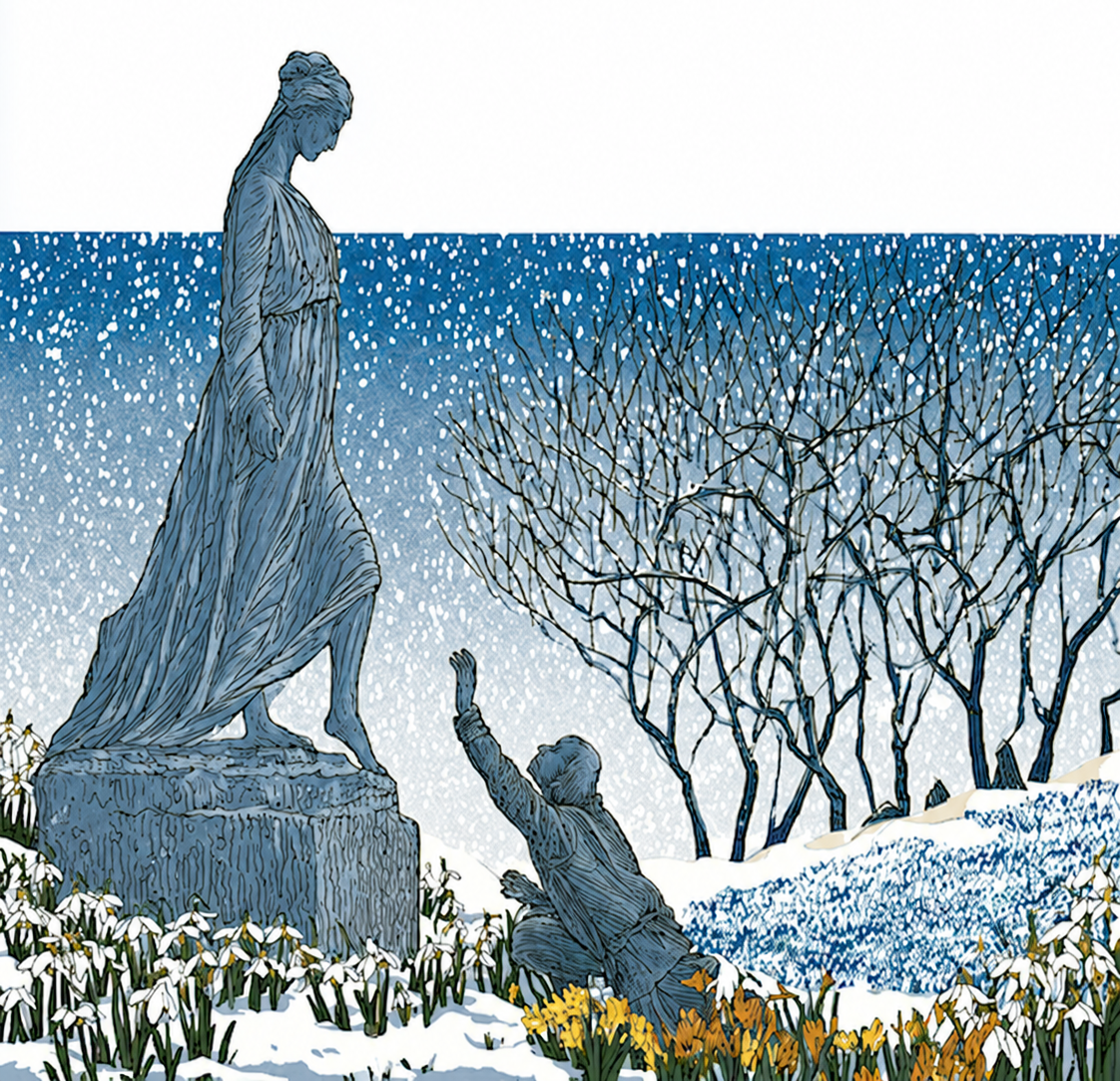
The change of medium matters as much as the changed setting. Shakespeare’s stage ending—Hermione’s apparently lifeless statue moving—is deliberately poised between theatrical marvel, recognition and belief. Prose allows Winterson greater access to remembered experience and motivation, but there is a risk that her explanations will distract from what the play leaves wondrously uncertain. Some readers may find the additional psychology clarifying, while others may feel that it diminishes the effect of the story.
Why reimagine a classic?
The attractions are substantial. First, new settings and idioms can provide an entrance to difficult older language without requiring the original to be discarded. Second, a shifted viewpoint can expose moral silences. Jean Rhys’s Wide Sargasso Sea (1966) gives a history to the first Mrs Rochester of Charlotte Brontë’s Jane Eyre, while Margaret Atwood’s The Penelopiad (2005) allows Penelope and the twelve executed maids to contest the heroic perspective of the classic Odyssey. Such revisions do not cancel earlier works or render them obsolete; rather, they make their assumptions available for extended scrutiny and appreciation.
Third, adaptation tests whether a story’s concerns outlast its original institutions. Atwood’s Hag-Seed (2016) locates Shakespeare’s The Tempest within a prison theatre project, reshaping questions of control, captivity and release. Fourth, recognition produces pleasure alongside surprise: Linda Hutcheon calls adaptation “repetition without replication.”[2] A reader may enjoy the remembered shape of the original and the unexpected difference of the reimagined text. For some readers, familiarity may also enable critical distance rather than nostalgia.
What can go wrong?
It is possible that an adaptation will attempt to trade on a famous title without sufficient imaginative achievement, or that it will displace rather than encourage (re)reading of its source. Historical relocation may turn alien assumptions into reassuringly modern ones. Supplying or spelling out characters’ motives can reduce ambiguity rather than enhancing the reading experience. Similarly, turning every silence into an explicit political statement can narrow a work’s multiple meanings. These are potential risks, not universal consequences of adaptation.
There is also an ethical question about who has permission to retell whose stories. Legal permission, especially for works still under copyright, differs from cultural legitimacy. Recasting stories from communities unlike one’s own may amplify voices or appropriate them; neither conclusion follows automatically from the author’s identity. The relevant questions concern research, acknowledgment, power, audience and the representation of living traditions. A supposedly universal classic may conceal sectional cultural interests, just as a revision may reproduce exclusions that it claims or assumes to correct.
The familiar complaint of “infidelity” is also too simple. A play and a novel employ different resources, and literal preservation may be artistically impossible or undesirable. Other questions relate to whether transformations are coherent and appropriately respect the original work, whether social and historical differences are recognised rather than erased, and whether neglected voices gain complexity rather than becoming vehicles for predetermined conclusions.
Neither replacement nor reverence
The strongest adaptations invite a double reading. Winterson cannot supersede Shakespeare, but her novel may sharpen attention to the play’s treatment of jealousy, lost children, time and forgiveness. Conversely, the play’s resistance to psychological closure reveals what the novel has chosen to make explicit. Reading the two together creates a richer experience than measuring one against the other by fidelity alone.
Comparison must also account for genre and performance. A dramatic character exists through speech, gesture, casting and staging, whereas a novel may present private thought and extended backstory. For example, Shakespeare’s statue scene in The Winter’s Tale is not simply information awaiting explanation. Its narrative and interpretive force depends on an apparent miracle unfolding as the characters observe it. A prose retelling may offer a different kind of suspense. Judging the transformation requires attention to what each form is uniquely able to accomplish.
The decisive question is therefore not whether classics should be altered—literary history shows that they always have been—but whether a particular retelling earns its imaginative freedom. A worthwhile adaptation respects the past without embalming it, challenges inherited perspectives without caricaturing them, and leaves readers eager to encounter both versions. The classic survives not by remaining untouched, but by sustaining disagreement and discovery.
What are your favourite literary adaptations or reimaginings?
Rev Dr Rod Benson lives in Sydney and writes about a range of topics from books and local history to food, faith, philosophy, ethics, research skills, and everyday life. Away from the keyboard, he enjoys cooking for friends, walking in the Australian bush, exploring a beach, discovering new restaurants, and reading philosophy, fiction and poetry. He is married to Emma and is minister of North Rocks Community Church, a Uniting Church congregation.
References
[1] Niamh J. O’Leary, “Queering The Winter’s Tale in Jeanette Winterson’s The Gap of Time,” Comparative Drama 57, no. 1 (2023). https://scholarworks.wmich.edu/compdr/vol57/iss1/6/
[2] Linda Hutcheon & Siobhan O’Flynn, A Theory of Adaptation (2nd edition; London: Routledge, 2013), preface & chapter 1. https://warwick.ac.uk/fac/arts/english/currentstudents/postgraduate/masters/modules/gothic/extracts_from_linda_hutcheon_-_a_theory_of_adaptation.pdf
Image source: Shakespeare Atlas

