
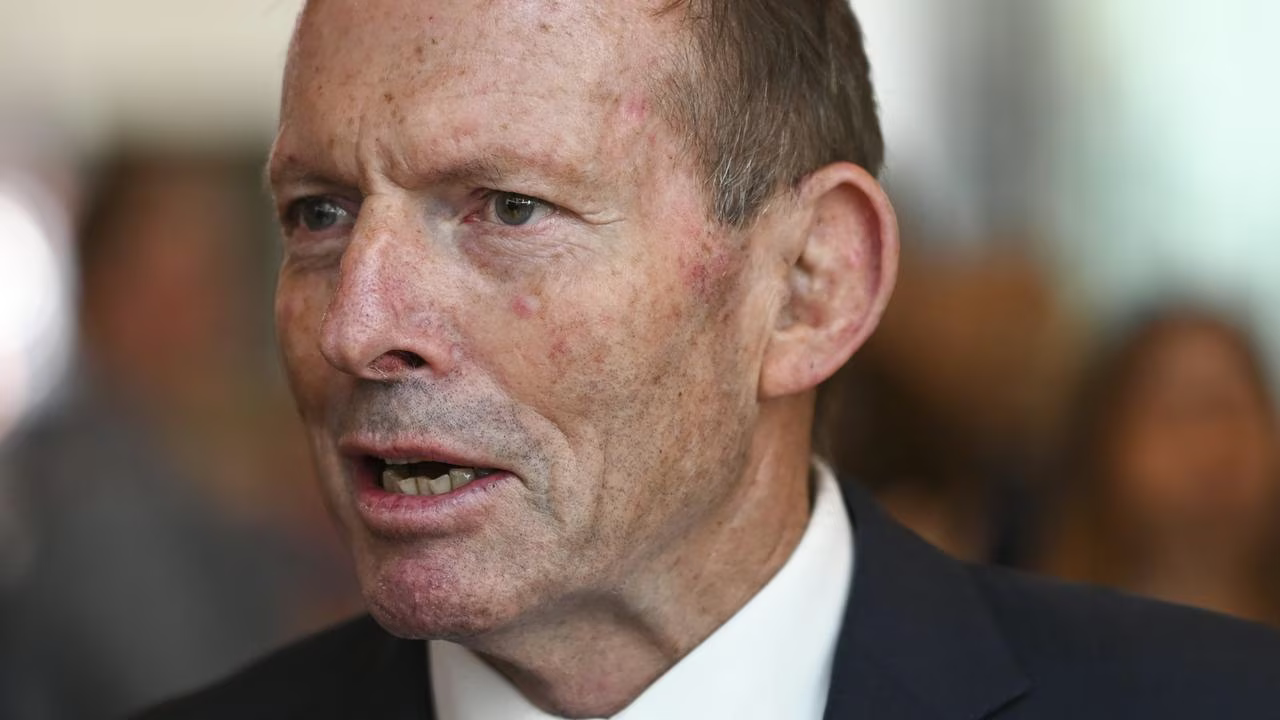
Few Australian institutions carry more symbolic weight than the Australian War Memorial. It is at once a national shrine, a museum, an archive and a place where military service is woven into the story Australians tell about themselves. That is why former Prime Minister Tony Abbott’s intervention on 18 September 2026 matters. He argues that the Memorial is not the right place to tell the story of what are often called the “frontier wars,” and that conflict between Aboriginal peoples and early settlers belongs elsewhere, principally in institutions concerned with the wider history of Australia.
Mr Abbott accepts that serious frontier violence occurred and deserves historical attention. His objection is institutional. In his view, the Memorial exists principally to commemorate Australians who served the nation in uniform, and its identity should not be broadened without wider public consent. The question, then, is not simply whether frontier violence happened. It is whether those histories properly belong within an institution devoted to Australian war, military service and national remembrance.
There is an important factual nuance. Frontier conflict is not entirely new to the Memorial. It has appeared in its galleries since the early 1980s. What has changed is the intended depth and prominence of its treatment. The Memorial Council has committed to a “broader and deeper depiction” of conflict during settlement in redeveloped pre-1914 galleries due to open in 2028. On 17–18 September 2026 the Memorial also hosted Imperialism and Resistance: Australia’s First Wars, bringing historians and curators together to consider Australian frontier conflicts alongside nineteenth-century wars in New Zealand, Sudan, China and South Africa. Abbott is therefore challenging a direction already under way, not merely warning against a future possibility.
What kind of institution is it?
Much of the dispute turns on a prior question: what, exactly, is the Australian War Memorial for? Abbott’s argument gains force from the Memorial’s statutory purpose. Section 5 of the Australian War Memorial Act 1980requires it to maintain a national memorial to Australians who died on or as a result of active service, or through wars and warlike operations in which Australians were on active service. Yet the Act also gives the institution a broader historical role. It must maintain a national collection, exhibit historical material, conduct research into Australian military history and disseminate information about it.
That dual character is crucial. The Memorial is not simply a museum, but neither is it only a shrine. The Roll of Honour, Hall of Memory and Tomb of the Unknown Australian Soldier serve a focused commemorative purpose. The galleries, collections and research programs have a wider interpretive function. Current redevelopment plans preserve this distinction: the Memorial has stated that its “sacred heart” will remain unchanged while its historical galleries are expanded.
There is good reason to be cautious about extending the Memorial’s remit too far. Charles Bean’s original vision emerged from the First World War and centred on preserving the records and relics of Australian military service while commemorating those who died. The institution later broadened its scope, but service and sacrifice remained central to its identity.
Yet Bean did not imagine only a shrine. He also wanted a museum and historical archive capable of helping Australians understand war. He opposed the glorification of conflict and urged that former enemies be treated without triumphalism or manufactured hatred. That does not settle the present debate, but it does show that remembrance and interpretation have always existed together within the Memorial.
The historical case for inclusion
The case for inclusion begins with an uncomfortable fact: British colonisation did not proceed only through peaceful settlement. Across different regions and periods, Aboriginal communities resisted incursions onto Country and dispossession, while settlers, police, colonial authorities and, in some contexts, military forces employed coercion and lethal violence.
The evidence for extensive frontier killing is substantial, although categories matter. The University of Newcastle’s Colonial Frontier Massacres project identifies hundreds of massacre sites between 1788 and 1930 and estimates more than 10,000 Aboriginal and Torres Strait Islander deaths in those incidents. Its researchers also stress that these figures remain estimates and may change as further evidence emerges.
But massacres and wars are not the same thing. Frontier violence included organised resistance and armed campaigns, but also punitive expeditions, police actions, massacres and other forms of communal violence. A serious historical account must resist the temptation to place every violent encounter under one label.
The phrase “frontier wars” can nevertheless be useful if employed carefully. There was no single Australian Frontier War resembling the First World War. Rather, there were numerous conflicts across different regions and generations involving distinct Indigenous nations, settler communities, police, colonial administrations and military personnel. The plural form better reflects that diversity.
Nor does warfare require modern states or standing armies. Human history contains many examples of irregular warfare, guerrilla resistance and armed defence by peoples without conventional military institutions. Some episodes of Aboriginal resistance display characteristics commonly associated with warfare: organised defence, repeated hostilities, strategic resistance and attempts to defend territory. Others are better described differently. The task is not to force the entire frontier into one category, but to distinguish carefully among different forms of violence and resistance.
There is also a deeper connection with later Australian military service. Indigenous Australians served in colonial forces before Federation and later in the Boer War, both world wars and subsequent conflicts. They did so for many reasons, often while living within a society marked by significant legal and social discrimination. The historical tension is striking: Indigenous Australians later served a nation whose colonial formation had involved dispossession and armed resistance experienced by earlier generations.
The case for restraint
There are, however, serious arguments for restraint. Critics reasonably ask whether sufficiently broad treatment of frontier conflict could gradually turn the War Memorial into a general museum of colonial history. That outcome is not inevitable, but the concern is legitimate. Australia already has museums, archives and cultural institutions whose remit is much wider. The War Memorial has a distinctive vocation and should not lose it.
There are also conceptual risks. If frontier conflict is incorporated carelessly, visitors may wonder whether Aboriginal people killed defending Country are being placed in the same commemorative category as those recorded on the Roll of Honour, or whether settlers and colonial police are being retrospectively cast as enemy combatants. Neither conclusion necessarily follows from historical interpretation, but the distinction must be explicit.
Frontier history also resists simple moral binaries. Relations between Aboriginal peoples and settlers varied greatly by place and period. Indigenous people sometimes served in colonial police forces or participated in conflicts involving other Indigenous groups. Settler conduct also differed widely. A persuasive account must name dispossession and violence clearly without reducing a highly complex history to two homogeneous populations confronting one another across a single moral divide.
Abbott’s insistence that the Australian people should be consulted before major changes are made raises another question: who has authority to shape national memory? The Memorial is a statutory authority governed by a Council, and curatorial decisions are not normally submitted to referendum. His argument is therefore political rather than legal. Even so, because the Memorial occupies an unusually powerful place in Australian civic memory, significant changes to its historical scope reasonably warrant transparent consultation with Indigenous communities, historians, veterans and the wider public.
Remembering and interpreting
The most constructive way through the controversy may lie in distinguishing commemoration from historical interpretation. The Memorial does not need to alter the purpose of the Roll of Honour, Hall of Memory or Tomb of the Unknown Australian Soldier in order to examine frontier warfare. Its redevelopment plans explicitly leave those spaces unchanged. The galleries, collections and research programs, however, have always performed a broader historical function.
This distinction is already reflected in the Memorial’s emerging approach. Its pre-1914 galleries will address conflict beginning with contact in 1788, First Nations resistance to colonial forces and later imperial conflicts involving Australians. The Memorial has also committed to community engagement as those galleries are developed.
Such an approach allows frontier conflict to be interpreted without pretending that every violent episode was a conventional war. It enables the Memorial to distinguish organised resistance from massacres, police violence and other forms of frontier coercion, while leaving uncertainty and regional variation visible.
The broader issue, then, is not simply what belongs in a gallery. It is how a nation chooses to remember itself. Abbott is right to press the question of institutional limits. The War Memorial cannot become the repository for every troubling aspect of Australian history. But those arguing for greater inclusion are also asking a serious question: can an institution devoted not only to remembrance but to understanding Australia’s experience of warfare give only marginal attention to armed conflicts that accompanied colonial expansion?
That tension should not be reduced to a choice between remembrance and truth-telling. The two need not be rivals. A defensible approach is to preserve the distinctive character of the Memorial’s commemorative spaces while allowing its historical galleries to examine frontier warfare carefully, proportionately and critically.
The real test is not whether one interpretation of Australian history defeats another. It is whether the Memorial can help Australians understand more clearly what happened, why the terminology remains contested, how different forms of violence should be distinguished, and how frontier conflict relates to the longer histories of service, sacrifice, dispossession and national identity.
A mature memorial culture need not erase difficult history in order to honour service, nor collapse every distinction in the name of inclusion. The Australian War Memorial’s harder task is to hold memory and history together: to honour those it was created to commemorate, to tell the truth about conflict as far as the evidence permits, and to allow Australians to encounter the complexity of their past without deciding in advance what they must conclude from it. That is not a weakening of national memory. It is one test of whether national memory is strong enough to bear the weight of our whole story.
Rev Dr Rod Benson is General Secretary of the NSW Ecumenical Council and a minister of the Uniting Church in Australia serving at North Rocks Community Church in Sydney.
Image source: The Australian


This essay opens up a way of honesty in relation to War and Australia. Thank you, Rod.
Yet, there is another level of honesty required in relation to Britain. Australia was created by British colonialism on your continent, just as we did the same in America, India, Africa and elsewhere. It was evil. We, Brits, killed locals until we were in control and white (really sallow pink) were recruited to run the show. When you look at Britain killing in Tibet, China, India, Africa, (Kenya in my lifetime) it is massive imperial evil. Yet we Brits blank it. We ruled the waves and will never, never be slaves. You are Australian and are not responsible for this. Generally you are nice to the Brits. But we historically are happy to aim a Maxim gun at people and mow them down. We do not own up to this. We are the nice guy fighting Hitler. My suggestion is that Australia needs to disown its British past. It is merely telling the truth and it is kind to us to tell the truth. I suspect Australia was also “used” in WW1 and WW2 in Britain’s self-interest in ways which we do not acknowledge.
The Commonwealth denotes a new set of relations in name and perhaps partly in fact, but it and the world need a new level of honesty about war, and you might provide it. As Proverbs says, “Faithful are the wounds of a friend.”