
By Rod Benson
Rick Warren’s IMPACT model, developed at Saddleback Valley Community Church in Orange County, California, is a practical method for sequencing songs within a worship service. Its historical importance lies in the way it brought Southern Baptist revivalism, charismatic musical flow, Church Growth thinking and late twentieth-century popular culture into a memorable and transferable framework. Its continuing usefulness depends on treating it as a servant of Christian worship rather than something resembling a complete theology or universal emotional script.
The IMPACT sequence
Rick Warren’s IMPACT model is a method for sequencing the musical elements of a worship service rather than a comprehensive order of Christian worship. Its letters stand for Inspire Movement, Praise, Adoration, Commitment, and Tie it all together. The sequence begins with accessible, energetic music, proceeds through praise towards more direct address to God, invites commitment, and concludes with a short song connecting the service’s themes. Warren describes the opening selection as an upbeat song intended to encourage physical and emotional participation, while the final song draws the service together and reinforces its central message.
The model is sometimes summarised as a movement from ‘hand-clapper’ to ‘hand-holder’ to ‘hand-raiser’, followed by another ‘hand-holder’. These descriptions refer respectively to energetic participation, corporate identification, intimate address to God and a concluding recovery of communal unity. Warren and Saddleback’s worship pastor Rick Muchow publicised the approach through publications, conferences and training events. Its dissemination encouraged evangelical and some mainline congregations to understand musical selections as a coherent worship set rather than a collection of unrelated songs.
IMPACT did not emerge from a single source, nor should it be treated simply as Warren’s personal invention. It combined Southern Baptist revivalism, post-war evangelical evangelism, the Church Growth Movement, Pentecostal and charismatic understandings of musical flow, and the popular and educational cultures of late twentieth-century America. Warren and Muchow gave memorable form to several impulses that were already developing across various Christian traditions.
Muchow and musical flow
The most precise historical account begins with Rick Muchow rather than Warren. According to Swee Hong Lim and Lester Ruth’s history of contemporary worship, Muchow visited Hope Chapel in Hermosa Beach, about 10 kilometres south of Los Angeles, while touring with a musical group in 1985. There he encountered the idea that a sequence of worship songs could function as a metaphorical journey into the biblical ‘holy of holies’. Muchow brought this understanding with him when Saddleback employed him in 1987. He and Warren then recast the earlier Pentecostal-charismatic account of musical progression in seeker-sensitive and evangelistic terms.
This distinction clarifies the authorship of the model. Warren became its best-known advocate, but the model emerged through collaboration with a musician who had encountered an existing practice of worship flow. Warren supplied the evangelistic, organisational and communicative framework; Muchow contributed practical knowledge of how musical tempo, lyrical perspective and congregational posture could shape a service. IMPACT was thus a contextual adaptation of charismatic worship practice within a Southern Baptist megachurch.
Earlier Pentecostal accounts often explained or employed musical progression as a spiritual movement into what was assumed to be God’s presence. At Saddleback, the same movement was increasingly explained in terms of accessibility, participation, mood and evangelistic effectiveness. The musical techniques remained similar, but the controlling rationale shifted towards creating a coherent and hospitable experience for worshippers, particularly newcomers.
A Baptist inheritance
Warren was formed within Southern Baptist life. He was the son of a Baptist minister and a fourth-generation pastor. He studied at California Baptist University and completed a Master of Divinity at Southwestern Baptist Theological Seminary in 1979. During his final year at Southwestern, assisted by evangelism professor Roy Fish, he studied one hundred of the largest churches in the United States. This background placed him within a tradition that valued biblical preaching, congregational participation, evangelism, conversion and practical ministerial effectiveness.
Traditional Southern Baptist worship was generally less formally prescribed than Anglican, Lutheran or Catholic liturgy, but it still possessed an identifiable evangelical shape. Hymns, prayer, choir music and preaching commonly culminated in an invitation to personal response, often accompanied by an invitation hymn. The commitment stage in IMPACT therefore did not originate with contemporary worship. It translated the older Baptist conviction that proclamation should lead to decision into a new musical and cultural idiom.
Revival services had long used gospel songs, testimonies, soloists and invitation hymns to engage emotion and clarify the expected response. IMPACT preserved this directional quality: a service should lead somewhere. It differed from the older revival pattern by distributing preparation for response across the musical sequence rather than reserving it for the period after the sermon.
The Baptist evangelist Billy Graham provided an important bridge between these traditions. Warren described Graham as his hero and model. Graham’s meetings combined accessible music, plain speech, careful organisation and an invitation to personal commitment. This combination anticipated Warren’s conviction that theological conservatism could be communicated through culturally accessible and professionally coordinated services.
The Church Growth movement and the seeker
Warren’s evangelical theology emphasised biblical authority, conversion, discipleship and mission, but his choice of methods was deliberately pragmatic. He distinguished between an unchanging Christian message and culturally variable means of communication. This allowed Saddleback to use musical styles familiar to unchurched baby boomers while maintaining that the substance of the gospel had not changed. His Doctor of Ministry studies at Fuller Theological Seminary placed him close to the Church Growth Movement associated with Donald McGavran and C. Peter Wagner. Church Growth practitioners encouraged leaders to study communities, identify cultural obstacles, examine effective congregations and adapt methods to the people they hoped to reach.
Warren employed this empirical orientation when establishing Saddleback. He surveyed local residents and developed the representative figure of ‘Saddleback Sam’: a suburban, professionally employed and nominally religious adult who rarely attended church. Respondents complained that churches were boring, unfriendly and disconnected from ordinary concerns. Warren concluded that many baby boomers might attend if churches used familiar music and addressed stress, marriage, parenting and financial pressures in intelligible language.
Robert Schuller’s Crystal Cathedral and Bill Hybels’s Willow Creek Community Church formed part of the same seeker-sensitive environment. Warren shared their attention to audience, hospitality, communication and service design while retaining recognisably conservative evangelical theology. He later warned, however, against equating purpose-driven ministry with one seeker-sensitive style. IMPACT belongs to one expression of his ministry philosophy, not a universal prescription for every congregation.
California’s musical revolution
The internal movement of IMPACT resembles the praise-and-worship pattern that developed within Pentecostal and charismatic Christianity. Energetic corporate songs were followed by slower, more intimate expressions of devotion, sometimes accompanied by raised hands, spontaneous prayer or quiet singing. Many communities understood songs as stages within a spiritual journey rather than isolated musical items.
California’s Jesus Movement supplied another vital setting. During the late 1960s and 1970s, young Christians brought guitars, folk music and rock-influenced styles into informal evangelical gatherings. Calvary Chapel in Orange County became particularly important. Its Maranatha! Music released The Praise Album in 1974, a collection of contemporary, often scripturally based congregational songs that functioned as a modern alternative to the hymnal.
Saddleback inherited this regional synthesis: Baptist evangelism, charismatic practices of musical progression and the sound world of popular culture. It systematised these influences more thoroughly than the early Jesus Movement had done. Spontaneous musical instinct became planned flow; a group of choruses became a curated worship set; and local practice became a reproducible model taught through books, conferences and church networks.
Music as experience
IMPACT must also be situated within wider changes in twentieth-century music. Radio, recorded music, television, festivals and stadium concerts made music a major vehicle of identity, community and emotional expression. Jazz, rhythm and blues, rock and roll, folk, disco and pop habituated successive generations to experiencing music bodily as well as intellectually.
Many baby boomers no longer accepted a sharp division between sacred music and the music through which they experienced ordinary life. Electric guitars, percussion, amplification and concert-style presentation came to signify cultural immediacy rather than necessarily irreverence. IMPACT’s opening movement therefore involved more than playing a fast song: rhythm and embodied participation could gather attention, reduce social anxiety and establish communal energy.
Radio, television, theatre and popular concerts also accustomed audiences to smooth transitions, emotional pacing and thematic unity. Worship-planning literature increasingly sought to eliminate awkward pauses and integrate music, speech, drama and visual presentation. IMPACT belongs to this culture of deliberately designed experience.
Worship as formation
Warren’s method also corresponds with developments in twentieth-century education. Educational practice increasingly attended not only to what a teacher presented but also to what learners understood, valued and did. Adult education emphasised relevance, prior experience, active participation and practical application.
Bloom’s taxonomy offers a useful comparison, although there is no evidence that it directly produced IMPACT. In 1956 Benjamin Bloom and his collaborators published a hierarchy of educational objectives in the cognitive domain. David Krathwohl, Bloom and Bertram Masia published the related affective taxonomy in 1964. Bloom’s group did not produce a detailed psychomotor taxonomy; later educators developed classifications for practical and embodied learning.
These taxonomies encouraged educators to think beyond the transmission of information and define learning in terms of developments in understanding, attitudes and abilities. IMPACT displays a comparable concern with bodily participation, devotional engagement and purposeful response. The connection is a methodological resemblance within the educational culture of the period, not a demonstrated line of dependence.
Warren’s preaching is strongly application-centred: it asks what attitude, action, value or belief should change in response to Scripture. IMPACT applies similar reasoning to worship. Yet worship cannot be reduced to instructional design. It involves divine initiative, communal memory, mystery, lament, sacramental encounter and forms of grace that cannot be organised into measurable outcomes.
Beyond adoration
One significant limitation of IMPACT is that it contains no clearly identified place for contemplation. Adoration and contemplation can overlap, but they are not identical. Adoration is expressive: worshippers address God with love, reverence, wonder or devotion. Contemplation is more receptive. It involves attending, waiting, listening and consenting to God’s presence without needing to produce an immediate verbal or emotional response.
A slow song is not necessarily conducive to contemplative worship. Many slow contemporary worship songs are emotionally intense declarations of intimacy, desire or surrender. They may fulfil IMPACT’s adoration or commitment functions while leaving little room for silence or receptive awareness. Contemplative worship is defined less by tempo than by the quality of attention it enables.
Contemplative songs are needed because worshippers do not always require further stimulation. Some arrive burdened by grief, anxiety, exhaustion or sensory overload. A simple melody, repeated scriptural phrase, sung response separated by silence, instrumental passage or unhurried chant may invite worshippers to rest before God rather than continually generate words.
Such music should be sung without haste and allowed to lead into actual silence. Repetition should deepen attention rather than merely prolong an emotional atmosphere. Contemplation can correct IMPACT’s implied momentum by permitting a service to pause, enter lament or remain with an unresolved question. It should not become withdrawal from discipleship or justice: attentive stillness can enlarge compassion and prepare worshippers for faithful action.
Contemplation is only one of several dimensions that IMPACT does not name. Christian worship also requires confession, thanksgiving, lament and intercession. These practices enable the church to acknowledge sin, receive forgiveness, grieve suffering, give thanks and bear the needs of the world before God.
A larger theology of worship
IMPACT is a model for arranging songs, not a comprehensive theology of Christian worship. Christian worship begins with God’s gracious initiative and is offered to the Father, through the Son, in the power of the Holy Spirit. It gathers the body of Christ around Scripture, proclamation, prayer and, in sacramental traditions, Baptism and the Lord’s Supper. It remembers God’s saving acts and anticipates the fulfilment of God’s reign.
These dimensions prevent worship from being reduced to musical experience or individual response. The Christian year locates each congregation within the gospel’s larger story; inherited prayers and songs connect it with the church across generations and cultures; and the dismissal sends worshippers into reconciliation, justice, service and witness.
A broad theology also recognises the church as the gathered body of Christ rather than an audience composed of autonomous individuals. Congregational song matters not simply because it affects personal emotion but because people listen to and sustain one another’s faith. The local congregation is joined, however imperfectly, to Christians across cultures, centuries and traditions.
This wider account raises pastoral questions about the visible responses presumed by IMPACT. Children, older people, people with disability, neurodivergent worshippers, trauma survivors and those experiencing depression or grief may participate differently. Stillness need not signify disengagement, just as physical exuberance does not necessarily demonstrate spiritual depth.
Beauty, transcendence and mystery must also be protected from an exclusively pragmatic approach. Poetry, symbol, sacrament, silence and music may disclose dimensions of reality that cannot be compressed into propositions or behavioural objectives. IMPACT is therefore one practical instrument within a broader ecology of worship, not its governing framework.
Adapting the model
In evangelical congregations, IMPACT can help leaders create coherence, but it should not require the same emotional arc every week. Scripture, the Christian calendar and congregational circumstances may call for lament, confession, testimony, celebration or silence. Commitment should include reconciliation, generosity, public witness and justice rather than only private decision.
Pentecostal and charismatic congregations may recognise IMPACT’s movement from praise towards intimacy, although their worship often permits greater spontaneity. Testimony, prophecy, prayer or prolonged response may alter the sequence. IMPACT can provide broad direction without suppressing openness to unexpected congregational or spiritual developments.
Liturgical congregations already possess a more comprehensive structure of gathering, Word, response, sacrament and sending. IMPACT may assist with the placement of songs, but it should serve the liturgy rather than replace it. Adoration may occur in a hymn or eucharistic prayer, commitment through creed and intercession, contemplation through silence after Scripture or Communion, and integration through blessing and sending.
Small, rural or ageing congregations do not require a band to apply the model’s soundest insight. Movement may be created by a familiar hymn sung confidently; adoration may arise through prayer; contemplation through silence or a gentle refrain; and commitment through a traditional hymn connecting belief with faithful living.
Multicultural congregations require particular care. Bodily movement, emotional expression and understandings of reverence vary across cultures. Worship leaders should listen across cultures, employ several musical traditions and resist treating white American popular culture as the universal language of accessibility.
A servant not a script
IMPACT’s achievement was to focus attention on coherence, participation and response. Its danger is the temptation to manufacture a predetermined emotional journey. Deliberate changes in tempo, lyrical intimacy and physical posture can become manipulative when outward feelings are treated as evidence of genuine worship.
Every tradition orders worship in ways that form attention and invite response. The question is not whether worship has a structure but whether that structure is theologically faithful, pastorally honest and hospitable to the congregation’s diversity. Responsible planning distinguishes invitation from manipulation and leaves room for grief, resistance, silence, ambiguity and grace.
The IMPACT concept is therefore best understood as a late twentieth-century evangelical synthesis rather than a theology of worship with potentially universal application. I have suggested that it translated a North American Baptist revival structure into contemporary musical language, adapted Pentecostal understandings of flow, absorbed Church Growth attention to context, and responded to cultures shaped by popular music and experiential learning.
Properly used, IMPACT can help worship leaders sequence songs with coherence and purpose. It must nevertheless remain subordinate to the larger movement of Word, sacrament, prayer, communal formation and sending through which the church remembers God’s grace, encounters Christ and is commissioned for faithful service in the world.
Rod Benson lives in Sydney and writes about a range of topics from books and local history to food, faith, philosophy, ethics, research skills, and everyday life. Away from the keyboard, he enjoys cooking for friends, walking in the Australian bush, exploring a beach, discovering new restaurants, and reading philosophy, fiction and poetry. He is married to Emma.
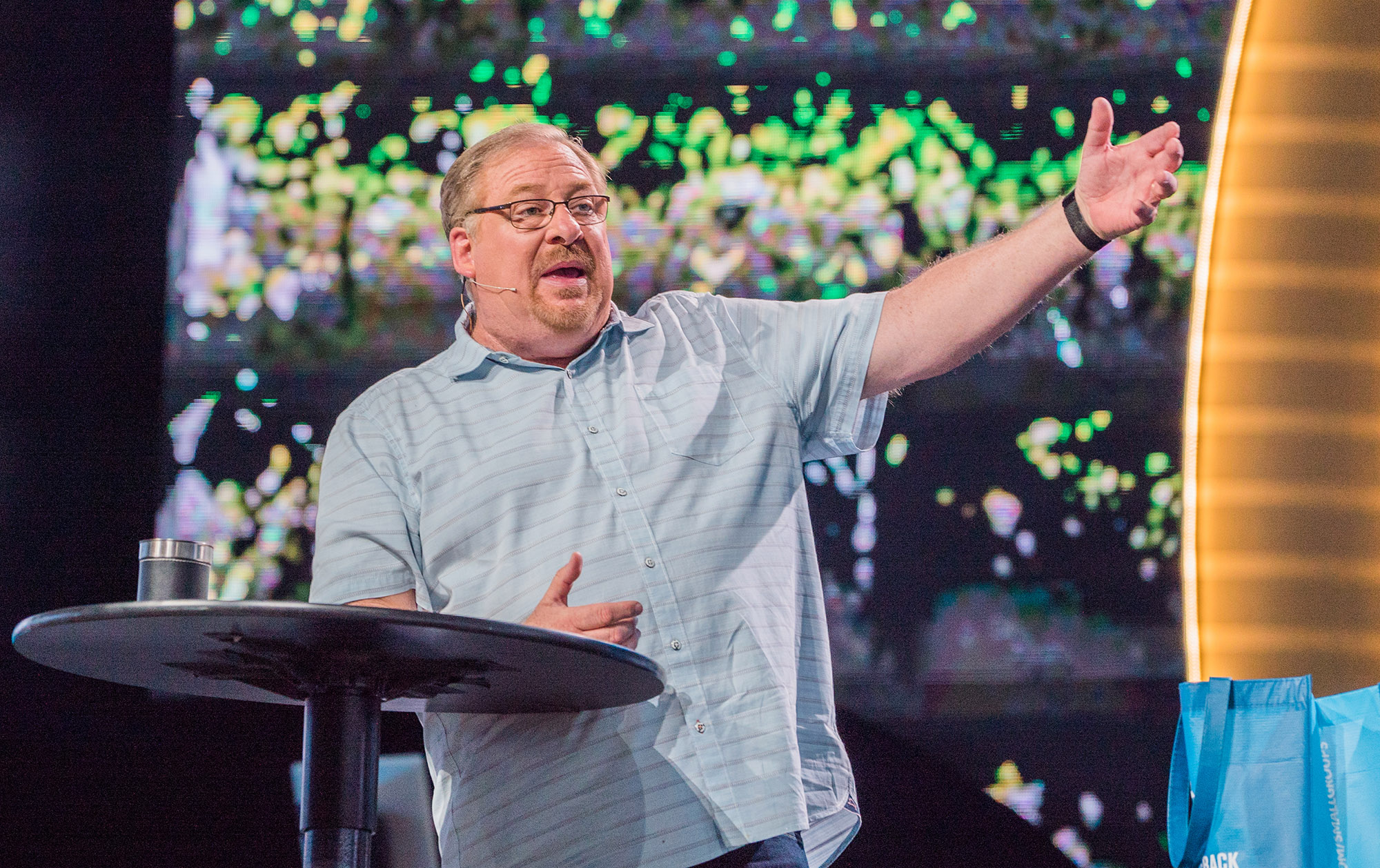
Image source: Baptist Press
Appendix: Contemporary songs for the IMPACT sequence
The following examples represent repertoire heard across Australian evangelical, Baptist, Anglican, Pentecostal and Uniting Church settings. The categories describe possible functions within a service, not fixed properties of the songs. Tempo, arrangement, congregational familiarity and placement may change how a song works. Each title links to a recording or a targeted recording search. Churches should confirm copyright permissions and licensing arrangements before reproducing lyrics, music or recordings.
IM Inspire Movement
- House of the Lord — Phil Wickham and Jonathan Smith. Celebratory refrain and strong rhythmic pulse suitable for gathering.
- This Is Amazing Grace — Phil Wickham Jeremy Riddle and Josh Farro. Energetic music joined to a concise proclamation of grace.
- My Lighthouse — Rend Collective. Accessible folk pop character and imagery of divine guidance.
- God Is Able — Ben Fielding and Reuben Morgan. An Australian song beginning with confident corporate declaration.
- Praise — Brandon Lake Chris Brown Chandler Moore Cody Carnes Pat Barrett and Steven Furtick. Repeated invitations encourage embodied communal participation.
P Praise
- Only a Holy God — Jonny Robinson Rich Thompson Dustin Smith and Michael Farren. Praises God’s holiness glory power and saving mercy.
- Holy Forever — Chris Tomlin Jenn Johnson Brian Johnson Jason Ingram and Phil Wickham. Joins contemporary praise with biblical imagery of heavenly worship.
- 10000 Reasons Bless the Lord — Matt Redman and Jonas Myrin. Calls worshippers to remember God’s goodness through changing circumstances.
- Great Are You Lord — David Leonard Jason Ingram and Leslie Jordan. Praises God as giver of life and breath.
- How Great Is Our God — Chris Tomlin Jesse Reeves and Ed Cash. A durable congregational song with Trinitarian language.
A Adoration
- What a Beautiful Name — Ben Fielding and Brooke Ligertwood. Addresses Christ through incarnation cross resurrection and victory.
- Good and Gracious King — Jonny Robinson James Ferguson and Michael Farren. Approaches God with humility reverence and confidence.
- Here I Am to Worship — Tim Hughes. Simple first person language expressing wonder before Christ.
- The Heart of Worship — Matt Redman. Returns attention from musical performance to Christ.
- Beautiful Saviour — Stuart Townend. Adoration shaped by incarnation suffering resurrection and reign.
Adoration is expressive devotion. These songs should not be confused with contemplative music, whose purpose is less to intensify verbal expression than to cultivate receptive attention, stillness and silence before God.
C Commitment
- Yet Not I but Through Christ in Me — Jonny Robinson Rich Thompson and Michael Farren. Frames discipleship as sustained by Christ rather than willpower.
- Build My Life — Pat Barrett Brett Younker Karl Martin Kirby Kaple and Matt Redman. Commits life to divine love and neighbour love.
- God of Justice — Tim Hughes. Connects worship with service among poor and oppressed people.
- Christ Be All Around Me — David Leonard Leslie Jordan Jack Mooring and Leeland Mooring. Expresses dependence on Christ throughout ordinary life.
- The Summons — John L Bell. Connects Christ’s call with costly embodied discipleship.
A responsible commitment song should arise from grace rather than emotional pressure and enlarge response beyond private belief to neighbour love, justice, vocation, care for creation and participation in God’s mission.
T Tie It All Together
- The Grace — Malcolm Gordon. A compact setting of the apostolic blessing for fellowship and mission.
- May the Feet of God Walk with You — Aubrey Podlich and Robin Mann. An Australian blessing connecting divine presence with daily life.
- Hear the Call of the Kingdom — Keith Getty Kristyn Getty and Stuart Townend. Sends worshippers towards evangelism mercy and public faithfulness.
- Build Your Kingdom Here — Rend Collective. An energetic corporate prayer for renewal mission and social transformation.
- Shine Jesus Shine — Graham Kendrick. A familiar missionary song gathering themes of renewal justice and witness.
The final song need not summarise every idea in the service. Its task is to provide a clear theological point of departure and connect gathered worship with life beyond the assembly.
Additional contemplative repertoire
- O Lord Hear My Prayer — Jacques Berthier and the Taize Community. A brief refrain suited to repetition and silence.
- Wait for the Lord — Jacques Berthier and the Taize Community. A patient scriptural refrain for Advent or attentive prayer.
- Be Still and Know — John L Bell. A simple invitation to receptive awareness.
- For You Deep Stillness — Robin Mann. An Australian song of stillness presence and place.
- Come and Find the Quiet Centre — Shirley Erena Murray and Beach Spring. Invites release from activity into prayerful attention.
These songs become genuinely contemplative when they are sung simply and allowed to open into sustained attention and silence. If musicians fill every space or speech resumes immediately, the songs remain reflective without fulfilling their contemplative potential.
Selected sources
- Lim Swee Hong and Lester Ruth Lovin on Jesus A Concise History of Contemporary Worship
- Rick Warren The Purpose Driven Church
- CCLI Top 100 Worship Songs
- Uniting Church in Australia Learning New Songs
- UCA Music Contemporary Music for Worship
- Cornell University Bloom’s Taxonomy
- Center for Action and Contemplation Resting in God Through Silence and Stillness

